- Cosmetic Dermatology
CROSS for Acne Scars
A precise technique that stimulates new collagen to remodel deep, narrow (ice-pick) acne scars.
Treats Certain Atrophic Acne Scars
Board-certified dermatologist Dr. Craig Singer performs CROSS for acne scars at his Bingham Farms practice.
Quick facts
Treats
Technique
Minimal
Sessions
Usually a series
Builds
New collagen
Pairs with
Subcision, microneedling
What is TCA CROSS Peel?
TCA CROSS Peel stands for TriChloroacetic Acid Chemical Reconstruction Of Skin Scars.
TCA CROSS peels are used to treat certain types of atrophic (“ice-pick” and “boxcar”) acne scars. The technique involves placing a small amount of high concentration TCA (85% to 100%) to the desired area. The acid causes destruction of the epidermis and dermis within the scar. New skin regenerates from adjacent hair follicles with production of dermal collagen and glycosaminoglycans over the next several weeks. The stimulation of new collagen helps elevate and improve the appearance of ice pick and box car type of acne scars. TCA CROSS peels are usually combined with other modalities in the treatment of acne scars.
Precise, scar-only treatment
By treating only the inside of each scar, CROSS can improve deep ice-pick scars that are difficult to address with resurfacing alone. A series of treatments gives the best result.
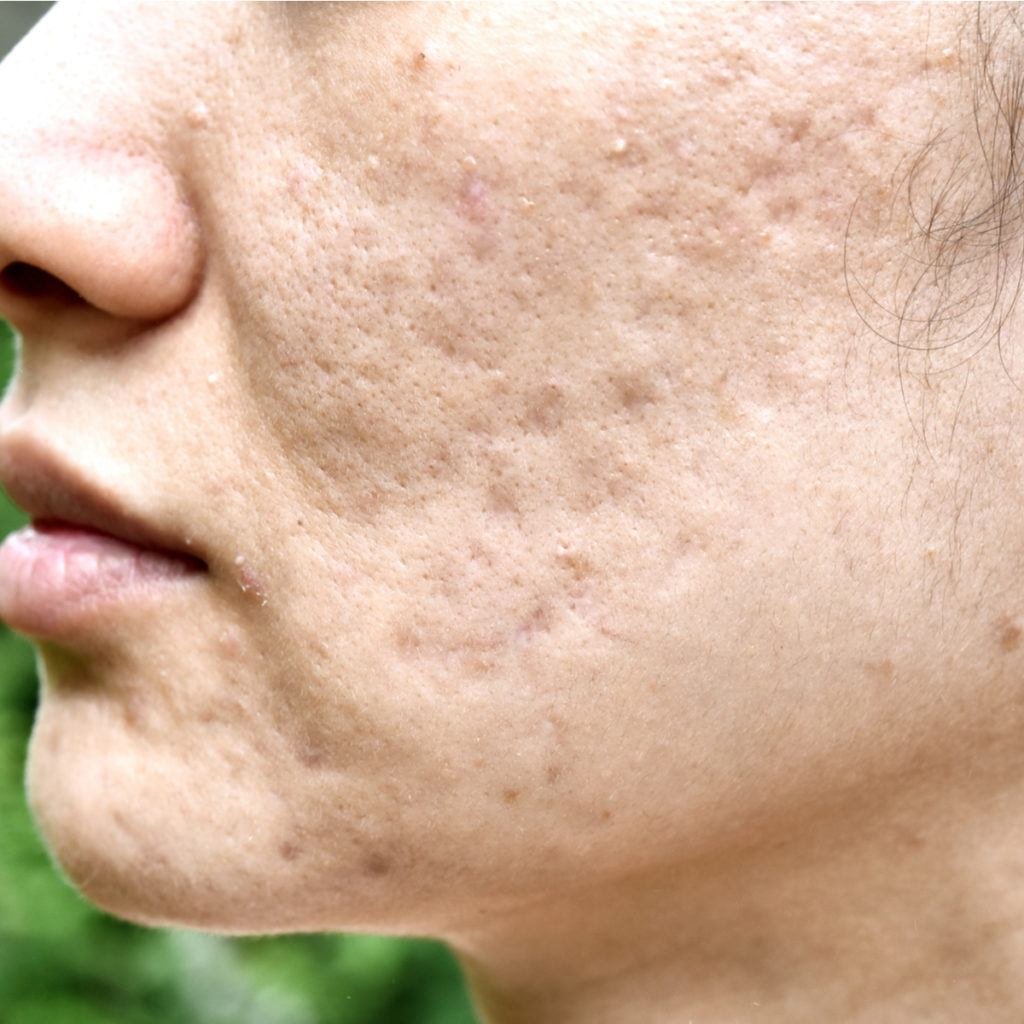
Ice-pick & boxcar acne scars
TCA CROSS targets atrophic acne scars: the deep, narrow “ice-pick” and sharply defined “boxcar” scars left behind by acne.
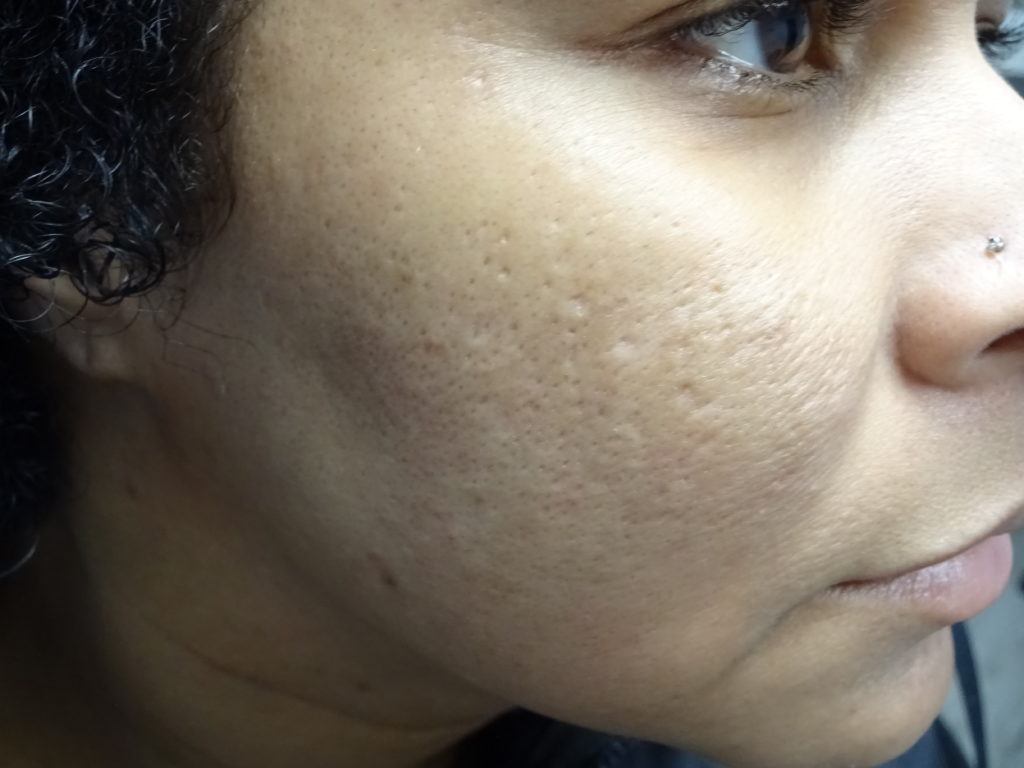
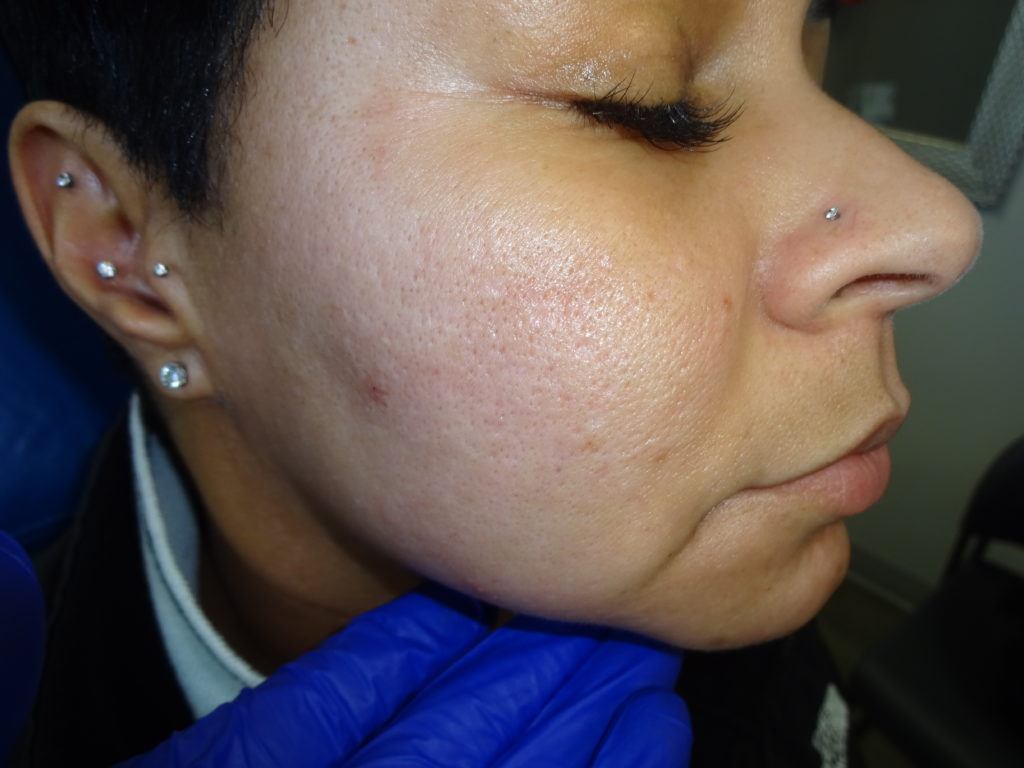
Actual patients of Craig Singer MD. Individual results vary.
How is the TCA cross peel performed?
The procedure is always performed by a physician.
1
Cleanse & map
After the patient’s face has been thoroughly cleansed and prepared, the areas to be treated are mapped out.
2
Apply TCA to each scar
High concentration TCA is applied using the point of a sterilized toothpick or wooden applicator to approximate the shape of the acne scar. The applicator is placed into the base of the scar until a white frost develops.
3
Protect & aftercare
A topical antibiotic ointment is then applied to all treated sites. Aftercare instructions are provided.
Treatments & timing
Most patients usually require anywhere from 3 to 4 treatments spaced 4 to 6 weeks apart.
The procedure takes between 10 to 20 minutes to perform depending upon the extent of scarring.
TCA CROSS recovery, day by day
Recovery is relatively quick with minimal discomfort. Here is what to expect after treatment:
First few hours
The treated areas frost white for several hours.
Day 2
A crust or scab typically forms on each treated spot.
First week
The areas turn red, and the crust or scab falls off spontaneously in about a week on average.
Day 7–10
Full recovery is expected within 7 to 10 days.
Following weeks
Residual redness may take a few weeks to resolve. Sun protection is essential during recovery.
Plan ahead
Do not schedule a TCA peel within 2 weeks of a social event.
What CROSS treats
CROSS is designed for deep, narrow scarring:
Ice-pick acne scars
Deep, narrow, pitted scars.
Deep, narrow scars
Scars too deep for resurfacing alone.
Some boxcar scars
Sharply defined depressed scars.
Pitted scarring
Improving the depth of each scar.
Often combined with
CROSS is one part of a complete scar plan:
Subcision
Releasing tethered rolling scars.
Microneedling
Laser resurfacing
Blending the overall surface.
A tailored scar plan
Matched to your scar types.
Frequently asked questions
What CROSS treats, how it works, comfort, downtime, sessions, and combination treatment.
Is the procedure painful?
There is some mild discomfort but no significant pain. A slight burning/stinging sensation lasts for minutes. No anesthesia is needed.
How long is the recovery after the TCA CROSS Peel?
Recovery from TCA cross peel is relatively quick with minimal discomfort. The treated areas frost white for several hours, thereafter turning red for one week. A crust or scab typically forms on day #2 but will fall off spontaneously in a week on average. Full recovery is expected within 7-10 days; however, residual redness may take weeks to resolve. Sun protection is essential during this recovery period. Do not schedule a TCA peel within 2 weeks of a social event.
Can darker skin types be treated with TCA cross peels?
Yes. All skin types can be safely treated with TCA cross peels; however, darker skin types, such as Latino, Middle Eastern or African-American, have a greater risk of hyperpigmentation. This means that treated areas may be darker than the surrounding skin for months. The use of sunscreen and bleaching creams are essential.
What are the risks of the procedure?
Significant complications are rare. Most scientific studies demonstrate a high level of safety with this procedure. The following complications are possible but rare:
- Persistent redness
- Persistent hyperpigmentation
- Persistent hypopigmentation
- Flare of herpes simplex virus
- Additional scarring
- Keloid formation
- Bacterial infection
What preparations do I need before the peel?
Priming the skin for several weeks beforehand with a topical retinoid (i.e Retin-A, tretinoin, tazorac, adapalene, etc.) is advisable. However, you must stop the retinoid 5 days prior to the peel. Patients with darker skin types should also use a bleaching cream for 2 weeks prior to the peel. Oral Valtrex (to prevent herpes infection) is started one day prior to the peel and should be taken one week afterwards. Direct sun exposure should be avoided 7 days before the peel and 2 weeks afterwards.
TCA CROSS for acne scars near Detroit, MI
Dr. Craig Singer’s Bingham Farms practice offers TCA CROSS and acne-scar treatment for patients across metro Detroit and Oakland County.
- Detroit
- Bingham Farms
- Bloomfield Hills
- Birmingham
- Southfield
- Farmington Hills
- Royal Oak
- Novi
- Troy
- West Bloomfield
- Rochester Hills
- Sterling Heights
Explore other cosmetic services
Patient testimonials

4.9
Based on Google reviews
HOUR Detroit Top Doc
Recognized dermatologist
All reviews
 Zoc Doc4.94.9Top Rated ServiceVerified by TrustindexTop Rated Service
- 4.9 Excellent rating Last 12 months
- New reviews collected regularly Recent review activity detected
- Leading Service Google Maps rating and review data
- Verified by Trustindex Based on real customer reviews Learn more
 4.94.9Top Rated ServiceVerified by TrustindexTop Rated Service
- 4.9 Excellent rating Last 12 months
- New reviews collected regularly Recent review activity detected
- Leading Service Google Maps rating and review data
- Verified by Trustindex Based on real customer reviews Learn more
 4.94.9Top Rated ServiceVerified by TrustindexTop Rated Service
- 4.9 Excellent rating Last 12 months
- New reviews collected regularly Recent review activity detected
- Leading Service Google Maps rating and review data
- Verified by Trustindex Based on real customer reviews Learn more
Posted on Google M Leone2 days ago
 Very precise, knowledgeable, and professional. Dr. Singer The best. The staff is also fantastic.Posted on Google
 Raina Sinclair6 days agoAbsolutely loved that I had a Doctor that listened to my concerns regarding my hair loss. I’m looking forward to the treatment regimen and growing my hair back.Posted on Google
 Melissa Woosley8 days ago⭐⭐⭐⭐⭐ Exceptional Experience with Dr. Craig Singer! I couldn’t be happier with my experience with Dr. Craig Singer. I had a comprehensive acne scar revision procedure, and I’m already seeing a noticeable improvement in my skin. My scars are looking shallower, and my skin is becoming smoother. I understand that results take time as collagen continues to develop, and I’m excited to see how much more improvement I’ll experience as my skin continues to heal. Dr. Singer has been attentive and thorough throughout the process. I especially appreciate that he takes the time to review my healing progress and make sure everything is going well. His knowledge, experience, and attention to detail have helped me feel confident in my decision to move forward with this procedure. Acne scarring has affected my confidence for a long time, so seeing real improvement means so much to me. I’m grateful to Dr. Singer for helping me take this step toward feeling better about my skin. I highly recommend Dr. Craig Singer to anyone considering acne scar treatment. I’m very happy with my experience so far and look forward to continuing my journey with him! Five stars all the way! ⭐⭐⭐⭐⭐Posted on Google
 cheryl solomon8 days agoDr Singer and his staff are the best. They listen to all the concerns you have and they answer all of your questions . From the time you walk in until the time you leave, the service is impeccablePosted on Google
 Janet Levine12 days agoincredibly kind, efficient office. special care for older people and so on top of everything and have solved problems nobody has solved for 20 years. Rhianna is an incredible wound care specialist. 25 stars to allPosted on Google
 Pamela Blackwell-Nwonye12 days agoDr Singer's office staff made me comfortable from the second I walked in. Dr. Singer himself is so very nice and has the knowledge for the treatment he gives. His treatment has totally improved my skin and I cannot thank him enough. He must be doing something right because most of the staff are the same people I have been dealing with all along. This is an office that gets to know YOU, and for that I am grateful.Posted on Google
 Pam Voss-Page13 days agoShelley is sensitive to my needs and makes sure that I am comfortable. This is my second round of treatments with Shelley. I'm very grateful for her expertise and gentle way. Thank you!Posted on Google
 Sarah Jacobs14 days agoAbsolutely amazing care. Dr. Singer has treated my family for years and been 100% accurate on diagnosis, including things other specialists had missed. For the past year he and his team have been treating my 86 year old mom with the most amazing care I’ve ever seen. Wound care team is top notch. Can’t say enough about the whole team.Posted on Google
 Vladimir Goldshteyn15 days agoOne word-Excellent!Posted on Google
 Melanie King Jackson16 days agoDr Singer and assistant were professional, attentive, & knowledgeable. All of which made me feel at ease while I was there.Posted on Google
 Tony Edmonds19 days agoDr Singer is very professional. I highly recommend!Posted on Google
 Pat Banks20 days agoVery professional, patient, kind, and thorough! Dr. Singer explains everything in layman's terms so that his patients understand everything.Posted on Google
 Troy Manni20 days agoHad a great experience here. Veronica was a wonderful provider and did an amazing job explaining everything to me through out my appointment. I will definitely be back to see her.Posted on Google
 Sarah Kozak-Leonard21 days agoI have struggled with acne since I was 11 years old — I'd seen so many derms and tried just about everything with little to no success. After my previous derm told me my only option was accutane, I scheduled with Dr. Singer as a last-ditch effort to see if that was truly my last option. Dr. Singer was so kind and listened to my concerns, and best of all, was able to provide me with an alternative that WORKED!! My skin is clearer than I ever dreamed it could be! I am forever grateful to FINALLY feel comfortable and confident in my skin! He and his staff genuinely changed my life! Thank you, Dr. Singer!! And thank you to the office staff who are always kind and courteous!Posted on Zoc Doc
 Sandra S.23 days ago
 Best dermatologist in the area. Super professional staff and personable physician.Posted on Google
 michael lockman24 days agoOn time for appointments. Dr. Singer has a great "bedside" manner. And oh yes, his medical advice is spot on [pun intended].Posted on Google
 M Mountain26 days agoFABULOUS DOCTOR!! 🎉🇺🇸🤗. and support staff too! Never a hesitation to visit!Posted on Google
 Paul Borden27 days agoDr Singers whole teem really got me through a rough time and continue to work for mePosted on Google
 Harriet Cooper28 days agoExcellent doctor, staff, support staff. I have known this team for 15 years and recommend without reservation to everyone I know. Dr Singer takes every patient issue, big or small seriously and takes needed time w patients. Office is also excellent at scheduling. Come on time and you will b seen on time. Dr Singer and staff also do very well w individuals w special needs. It’s unusual to find all levels of staff to b competent welcoming and follow through on medical issues and communications. Harriet CooperPosted on Google
 Nash Nash33 days agoI’m very happy with the service, And Veronica was very nice and helpful she listened to my concerns I appreciate that.Posted on Google
 Cheryl Courage34 days agoI wouldn’t take my child to any other dermatologist! This place is the best.Posted on Zoc Doc
 Thomas M.69 days agoI've been going to Dr. Singer for a long while now. He is very talented and does a great job on my annual skin screenings and takes action when something is suspicious on my skin, so I always feed confident when I leave that I'm in good hands. I would recommend him to anyone that is looking for a very good doctor of dermatology.Posted on Zoc Docmichael O.82 days agoMy PA Veronica was knowledgeable and a great listener. She was empathatic to my concerns and helped put me at ease. The entire staff was kind and knowledgeable.Posted on Zoc Doc
 Ernst F.91 days agoGreat experience! Dr. Singer is very professional, attentive, knowledgeable and kind. Very happy with the visit. Will recommend to friend and familyPosted on Zoc Doc
 Debbie N.120 days agoDr Singer is very thorough, explaining the need to remove a spot on my chest. He handled the procedure without pain. And gave me samples for dry scalp. I come back from Fl to get my annual check. Office staff is professional and friendly.Posted on Zoc DocZocdoc user122 days agoExcellent, fast, and listened to my whole history and addressed all my concerns and more.Posted on Zoc Doc
 Melissa W.127 days agoHighly recommend Dr. Singer, very knowledgeable and explained everything to me!Posted on Zoc DocEric P.143 days agoVery thorough and listened to me to understand my issues. I’m happy I went to their office to get my problems evaluated and addressed.Posted on Zoc DocLorene G.156 days agoDr Singer takes his time listening to his patients. I was given a thorough full body exam. Feeling comfortable with a doctor is very important to me. I would highly recommend Dr. Singer.Posted on Zoc DocZocdoc user162 days agoDr Singer is grade A class, he gave me a break on the bill as I didn't have quite enough money to cover it. I recommend him and would go visit him for any skin issue. His staff were also friendly and efficient.Posted on Zoc DocAngela P.185 days agoMy appointment was timely. Doctor Singer was professional and courteous throughout the exam. He explained his findings and communicated what my follow up plan should be.Posted on Zoc DocChrista B.194 days agoDr. Singer possesses an excellent bedside manner and never rushes you during your appointment.Posted on Zoc Doc
 Belle K.201 days ago5 Stars for Autumn at the front deskPosted on Zoc DocLuke P.210 days agoDr. Singer and his staff are amazing!!!Posted on Zoc Doc
 Brenda T.248 days agoThere was no wait time once you checked in.Posted on Zoc DocGlenn G.272 days agoGreat, caring and thorough doctor. Kind, personable and, most importantly, knows his field.Posted on Zoc Doc
 Zocdoc user283 days agoAbsolutely the best care possible. Dr. Singer and his staff, especially Tina, are amazing.Posted on Zoc DocAnthony L.289 days agoDr. singer and his team are phenomenal! This is the best Dermatologist I have ever been to. I live over an hour away from his office, but I will make the long drive every time because of how great Dr. Singer and his team are. I would recommend Dr. singer to everyone if they are in need for a great Dermatologist.Posted on Zoc DocDamian R.300 days agoI took my son to see Dr. Craig Singer. He was very professional and explained everything very clear. The office was very clean and the staff was amazing.Posted on Zoc DocZocdoc user326 days ago
 I like his approach of not immediately recommending an intrusive procedure, will see him again in 6 months for progress report on skin care regime recommended by him

About Dr. Craig Singer MD Dermatology
Located in Bingham Farms, Craig Singer MD Dermatology was founded in 2017 by Dr. Craig Singer, a board-certified dermatologist.
We specialize in medical, surgical and cosmetic dermatology, treating patients of all ages, newborn through elderly. We have expertise in a wide variety of skin conditions including eczema, acne, and warts as well as complicated dermatological issues that include hair loss and autoimmune disease. In addition, we are highly skilled in the evaluation of moles and skin cancer.
For more than 20 years, Dr. Craig Singer has helped thousands of patients look and feel their best.

20+ Years
Trusted by Thousands
Board-Certified
Dermatologist & Pediatrician