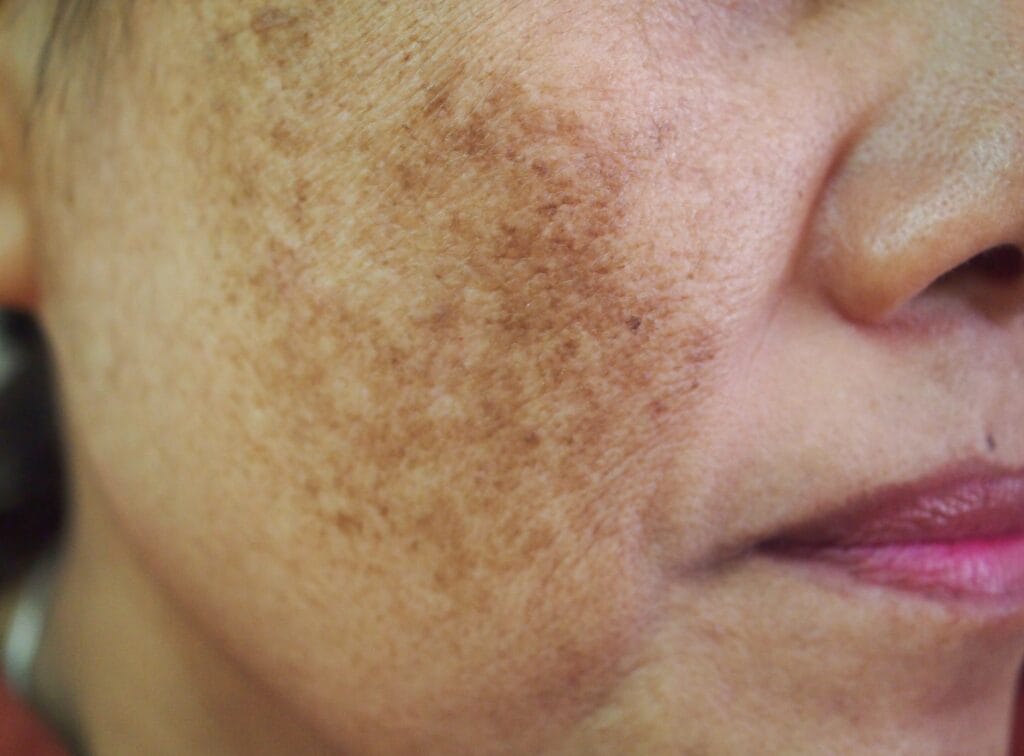
A cyst is a sac containing liquid or semisolid material. Dr. Craig Singer routinely removes sebaceous and pilar cysts through surgical excision under local anesthesia.
Cyst removal is part of the surgical dermatology care Dr. Craig Singer provides at his Bingham Farms practice.
Treats
What it is
Curative when the full sac is removed
A cyst is a closed sac that forms under the skin and fills with liquid or semisolid material. Most are benign and painless, though some can grow, feel tender, or become inflamed. Depending on the type and where it forms, some cysts clear up on their own, while others are best removed in a simple in-office procedure.
Epidermal inclusion cysts, also called “sebaceous cysts,” are the most common type of skin cyst and are typically located on the face and trunk. They are felt to develop as a result of injury, in which the opening of the hair follicle tucks inwards, trapping skin cells inside. Cystic acne may predispose patients to the development of epidermal inclusion cysts. The cyst forms as a painless swelling in the upper layer of the skin, often with a dilated opening (see photos). Non-inflamed cysts are painless, but with pressure, cyst contents can be pushed out through the opening, often with a foul odor. Squeezing a cyst can sometimes cause rupture of the wall producing an intensely painful red swelling necessitating drainage by a physician. Often a ruptured cyst looks infected (much like a boil), though most of the time this represents a foreign body reaction. It is virtually impossible to remove the sac when the cyst is inflamed. Most cysts do not require removal unless desired by the patient. Treatment involves surgical excision, which is curative as long as the entire sac (cyst wall) is removed. Dr. Craig Singer routinely excises epidermal inclusion cysts through the use of local anesthesia.
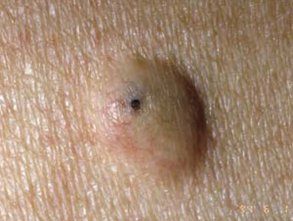
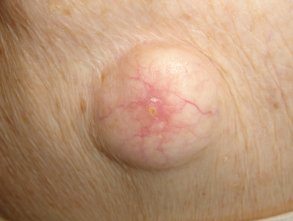
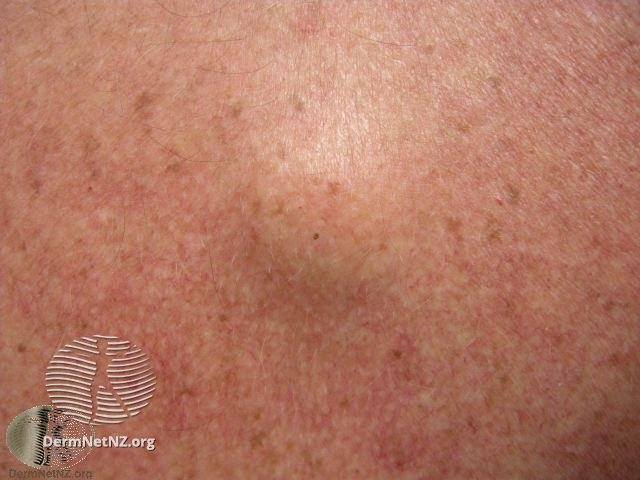
Pilar cysts are commonly seen on the scalp. These are benign cysts derived from the root sheath of the hair follicle, and may be solitary or multiple. Pilar cysts are painless swellings and have no dilated opening. The cause for these cysts is unclear, however many people have a family history of pilar cysts. Treatment involves surgical excision and removal of the sac, which is typically easier than with epidermal inclusion cysts. Dr. Craig Singer routinely excises pilar cysts through the use of local anesthesia.
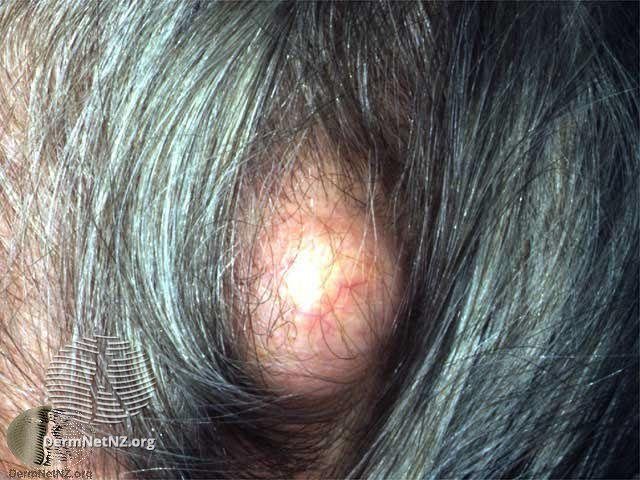
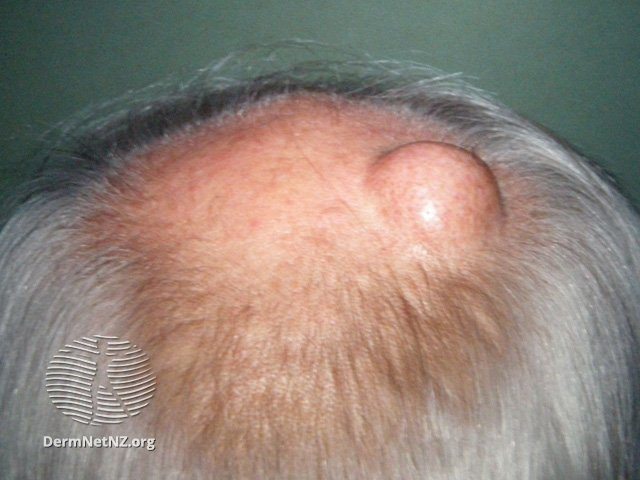
Types of cysts, why they form on the shoulder and back, infected and ruptured cysts, and how they are removed.
The two most common are epidermal inclusion (sebaceous) cysts and pilar cysts. Epidermal inclusion cysts can appear almost anywhere on the body, commonly on the face, neck, back, and shoulders, while pilar cysts are usually found on the scalp. Both are benign, slow-growing pockets of keratin under the skin.
The shoulders, upper back, neck, and face are among the most common places for epidermal inclusion cysts. They form when surface skin cells move deeper into the skin and keep multiplying instead of shedding, creating a sac filled with keratin. They are benign and not contagious.
A cyst can become red, swollen, tender, and warm if it ruptures under the skin or becomes infected, and it may drain a thick material with a foul odor. An inflamed or infected cyst should be evaluated rather than squeezed. Dr. Singer can settle the inflammation and, once it calms down, remove the sac so the cyst does not return.
Most cysts are painless swellings, and an epidermal inclusion or pilar cyst usually causes no discomfort on its own. A cyst can become painful if it ruptures, becomes inflamed, or gets infected, which is a common reason people decide to have one removed.
No. Squeezing or popping a cyst can push its contents deeper, trigger inflammation or infection, and almost always leaves the sac behind, so the cyst returns. The reliable way to clear a cyst for good is surgical removal of the entire sac.
Dr. Craig Singer removes cysts by surgical excision under local anesthesia, taking out the whole sac so the cyst will not grow back. Pilar cysts on the scalp are typically easier to remove than epidermal inclusion cysts, and most removals are quick in-office procedures.
See a dermatologist if a cyst is growing, painful, red or draining, keeps coming back, or sits in a spot that bothers you. Dr. Singer can confirm the lump is a benign cyst rather than something else and remove it cleanly with minimal scarring.
Bolognia, Jorizzo and Rapini. Dermatology. Second edition, chapter 110: Cysts
Dermnet NZ, www.Dermnetnz.com

Based on Google reviews
Recognized dermatologist
All reviews
 Zoc Doc4.94.9Top Rated ServiceVerified by TrustindexTop Rated Service
- 4.9 Excellent rating Last 12 months
- New reviews collected regularly Recent review activity detected
- Leading Service Google Maps rating and review data
- Verified by Trustindex Based on real customer reviews Learn more
 4.94.9Top Rated ServiceVerified by TrustindexTop Rated Service
- 4.9 Excellent rating Last 12 months
- New reviews collected regularly Recent review activity detected
- Leading Service Google Maps rating and review data
- Verified by Trustindex Based on real customer reviews Learn more
 4.94.9Top Rated ServiceVerified by TrustindexTop Rated Service
- 4.9 Excellent rating Last 12 months
- New reviews collected regularly Recent review activity detected
- Leading Service Google Maps rating and review data
- Verified by Trustindex Based on real customer reviews Learn more
Posted on Google J t1 days ago
 Craig Singer Dermatology has the best staff & my visit went flawlessly. I highly recommend everyone to this office.Posted on Google
 M Leone3 days agoVery precise, knowledgeable, and professional. Dr. Singer The best. The staff is also fantastic.Posted on Google
 Raina Sinclair7 days agoAbsolutely loved that I had a Doctor that listened to my concerns regarding my hair loss. I’m looking forward to the treatment regimen and growing my hair back.Posted on Google
 Melissa Woosley9 days ago⭐⭐⭐⭐⭐ Exceptional Experience with Dr. Craig Singer! I couldn’t be happier with my experience with Dr. Craig Singer. I had a comprehensive acne scar revision procedure, and I’m already seeing a noticeable improvement in my skin. My scars are looking shallower, and my skin is becoming smoother. I understand that results take time as collagen continues to develop, and I’m excited to see how much more improvement I’ll experience as my skin continues to heal. Dr. Singer has been attentive and thorough throughout the process. I especially appreciate that he takes the time to review my healing progress and make sure everything is going well. His knowledge, experience, and attention to detail have helped me feel confident in my decision to move forward with this procedure. Acne scarring has affected my confidence for a long time, so seeing real improvement means so much to me. I’m grateful to Dr. Singer for helping me take this step toward feeling better about my skin. I highly recommend Dr. Craig Singer to anyone considering acne scar treatment. I’m very happy with my experience so far and look forward to continuing my journey with him! Five stars all the way! ⭐⭐⭐⭐⭐Posted on Google
 cheryl solomon9 days agoDr Singer and his staff are the best. They listen to all the concerns you have and they answer all of your questions . From the time you walk in until the time you leave, the service is impeccablePosted on Google
 Janet Levine13 days agoincredibly kind, efficient office. special care for older people and so on top of everything and have solved problems nobody has solved for 20 years. Rhianna is an incredible wound care specialist. 25 stars to allPosted on Google
 Pamela Blackwell-Nwonye13 days agoDr Singer's office staff made me comfortable from the second I walked in. Dr. Singer himself is so very nice and has the knowledge for the treatment he gives. His treatment has totally improved my skin and I cannot thank him enough. He must be doing something right because most of the staff are the same people I have been dealing with all along. This is an office that gets to know YOU, and for that I am grateful.Posted on Google
 Pam Voss-Page14 days agoShelley is sensitive to my needs and makes sure that I am comfortable. This is my second round of treatments with Shelley. I'm very grateful for her expertise and gentle way. Thank you!Posted on Google
 Sarah Jacobs15 days agoAbsolutely amazing care. Dr. Singer has treated my family for years and been 100% accurate on diagnosis, including things other specialists had missed. For the past year he and his team have been treating my 86 year old mom with the most amazing care I’ve ever seen. Wound care team is top notch. Can’t say enough about the whole team.Posted on Google
 Vladimir Goldshteyn16 days agoOne word-Excellent!Posted on Google
 Melanie King Jackson17 days agoDr Singer and assistant were professional, attentive, & knowledgeable. All of which made me feel at ease while I was there.Posted on Google
 Tony Edmonds20 days agoDr Singer is very professional. I highly recommend!Posted on Google
 Pat Banks21 days agoVery professional, patient, kind, and thorough! Dr. Singer explains everything in layman's terms so that his patients understand everything.Posted on Google
 Troy Manni21 days agoHad a great experience here. Veronica was a wonderful provider and did an amazing job explaining everything to me through out my appointment. I will definitely be back to see her.Posted on Google
 Sarah Kozak-Leonard22 days agoI have struggled with acne since I was 11 years old — I'd seen so many derms and tried just about everything with little to no success. After my previous derm told me my only option was accutane, I scheduled with Dr. Singer as a last-ditch effort to see if that was truly my last option. Dr. Singer was so kind and listened to my concerns, and best of all, was able to provide me with an alternative that WORKED!! My skin is clearer than I ever dreamed it could be! I am forever grateful to FINALLY feel comfortable and confident in my skin! He and his staff genuinely changed my life! Thank you, Dr. Singer!! And thank you to the office staff who are always kind and courteous!Posted on Zoc Doc
 Sandra S.24 days ago
 Best dermatologist in the area. Super professional staff and personable physician.Posted on Google
 michael lockman25 days agoOn time for appointments. Dr. Singer has a great "bedside" manner. And oh yes, his medical advice is spot on [pun intended].Posted on Google
 M Mountain27 days agoFABULOUS DOCTOR!! 🎉🇺🇸🤗. and support staff too! Never a hesitation to visit!Posted on Google
 Paul Borden28 days agoDr Singers whole teem really got me through a rough time and continue to work for mePosted on Google
 Harriet Cooper29 days agoExcellent doctor, staff, support staff. I have known this team for 15 years and recommend without reservation to everyone I know. Dr Singer takes every patient issue, big or small seriously and takes needed time w patients. Office is also excellent at scheduling. Come on time and you will b seen on time. Dr Singer and staff also do very well w individuals w special needs. It’s unusual to find all levels of staff to b competent welcoming and follow through on medical issues and communications. Harriet CooperPosted on Google
 Nash Nash34 days agoI’m very happy with the service, And Veronica was very nice and helpful she listened to my concerns I appreciate that.Posted on Zoc Doc
 Thomas M.70 days agoI've been going to Dr. Singer for a long while now. He is very talented and does a great job on my annual skin screenings and takes action when something is suspicious on my skin, so I always feed confident when I leave that I'm in good hands. I would recommend him to anyone that is looking for a very good doctor of dermatology.Posted on Zoc Docmichael O.83 days agoMy PA Veronica was knowledgeable and a great listener. She was empathatic to my concerns and helped put me at ease. The entire staff was kind and knowledgeable.Posted on Zoc Doc
 Ernst F.92 days agoGreat experience! Dr. Singer is very professional, attentive, knowledgeable and kind. Very happy with the visit. Will recommend to friend and familyPosted on Zoc Doc
 Debbie N.121 days agoDr Singer is very thorough, explaining the need to remove a spot on my chest. He handled the procedure without pain. And gave me samples for dry scalp. I come back from Fl to get my annual check. Office staff is professional and friendly.Posted on Zoc DocZocdoc user123 days agoExcellent, fast, and listened to my whole history and addressed all my concerns and more.Posted on Zoc Doc
 Melissa W.128 days agoHighly recommend Dr. Singer, very knowledgeable and explained everything to me!Posted on Zoc DocEric P.144 days agoVery thorough and listened to me to understand my issues. I’m happy I went to their office to get my problems evaluated and addressed.Posted on Zoc DocLorene G.157 days agoDr Singer takes his time listening to his patients. I was given a thorough full body exam. Feeling comfortable with a doctor is very important to me. I would highly recommend Dr. Singer.Posted on Zoc DocZocdoc user163 days agoDr Singer is grade A class, he gave me a break on the bill as I didn't have quite enough money to cover it. I recommend him and would go visit him for any skin issue. His staff were also friendly and efficient.Posted on Zoc DocAngela P.186 days agoMy appointment was timely. Doctor Singer was professional and courteous throughout the exam. He explained his findings and communicated what my follow up plan should be.Posted on Zoc DocChrista B.195 days agoDr. Singer possesses an excellent bedside manner and never rushes you during your appointment.Posted on Zoc Doc
 Belle K.202 days ago5 Stars for Autumn at the front deskPosted on Zoc DocLuke P.211 days agoDr. Singer and his staff are amazing!!!Posted on Zoc Doc
 Brenda T.249 days agoThere was no wait time once you checked in.Posted on Zoc DocGlenn G.273 days agoGreat, caring and thorough doctor. Kind, personable and, most importantly, knows his field.Posted on Zoc Doc
 Zocdoc user284 days agoAbsolutely the best care possible. Dr. Singer and his staff, especially Tina, are amazing.Posted on Zoc DocAnthony L.290 days agoDr. singer and his team are phenomenal! This is the best Dermatologist I have ever been to. I live over an hour away from his office, but I will make the long drive every time because of how great Dr. Singer and his team are. I would recommend Dr. singer to everyone if they are in need for a great Dermatologist.Posted on Zoc DocDamian R.301 days agoI took my son to see Dr. Craig Singer. He was very professional and explained everything very clear. The office was very clean and the staff was amazing.Posted on Zoc DocZocdoc user327 days ago
 I like his approach of not immediately recommending an intrusive procedure, will see him again in 6 months for progress report on skin care regime recommended by him
Located in Bingham Farms, Craig Singer MD Dermatology was founded in 2017 by Dr. Craig Singer, a board-certified dermatologist.
We specialize in medical, surgical and cosmetic dermatology, treating patients of all ages, newborn through elderly. We have expertise in a wide variety of skin conditions including eczema, acne, and warts as well as complicated dermatological issues that include hair loss and autoimmune disease. In addition, we are highly skilled in the evaluation of moles and skin cancer.
For more than 20 years, Dr. Craig Singer has helped thousands of patients look and feel their best.

Trusted by Thousands
Dermatologist & Pediatrician