- Cosmetic Dermatology
Subcision®
Subcutaneous Incisionless Surgery
Board-certified dermatologist Dr. Craig Singer performs subcision for acne scars at his Bingham Farms practice.
Quick facts
Treats
Rolling, depressed scars
Procedure
Downtime
A few days of bruising
Sessions
Often a series
Pairs with
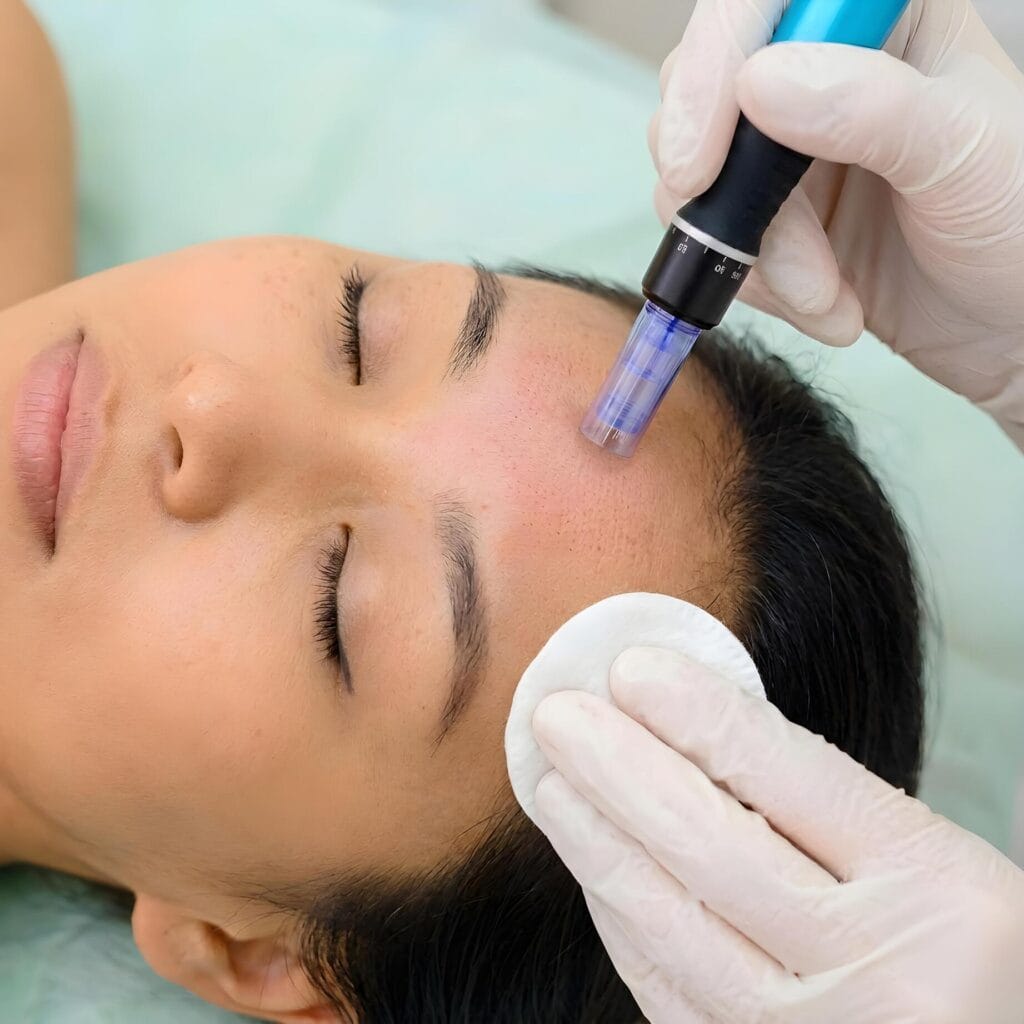
Microneedling, fillers, laser
Results
Build over weeks
What is Subcision®?
Subcision is a minor in-office procedure used to improve depressed, rolling acne scars. Many of these scars are tethered down by fibrous bands beneath the surface. Using a fine needle or cannula, Dr. Singer releases those bands so the skin is free to lift and smooth. Subcision is often combined with microneedling, fillers, or laser for the best overall result.
Subcision® is a minor surgical procedure for improving the appearance of acne scars. It is also called “subcutaneous incisionless surgery.”
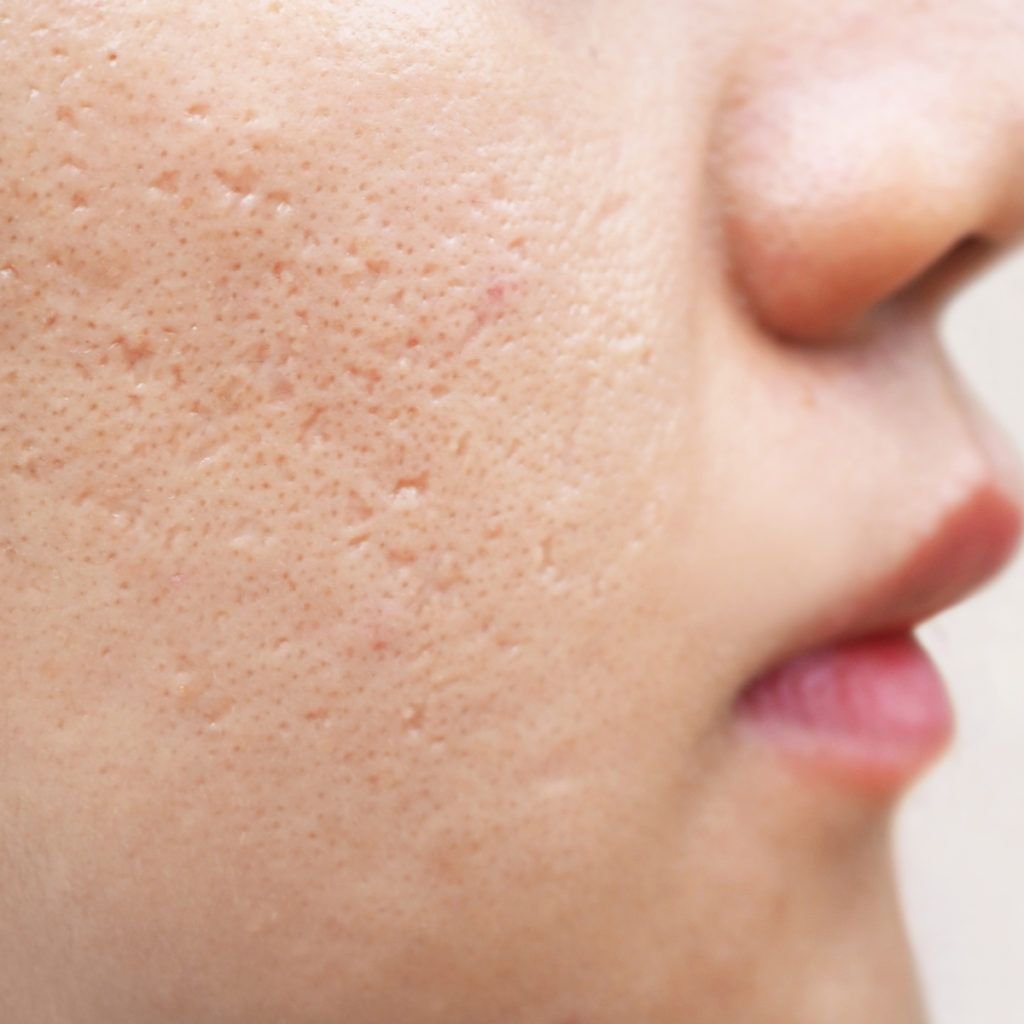
Certain acne scars, such as “rolling” or “boxcar” types, have tethering bands below the skin that pull the scar down making it look depressed. Subcision® is a technique that breaks these tethering bands, thereby releasing the scar with new healthy collagen formation. The result is elevation of the scar and improved cosmetic appearance.
Subcision® is traditionally performed using a special sharp hypodermic needle (AKA Nokor Needle) inserted underneath the skin surface. In our clinic, however, we use a modified version of Subcision® in which a blunt-tipped cannula (18 or 22 Gauge) is used instead. Studies have shown effectiveness of this modified technique with reduction in risk of hematoma formation and less downtime. Subcision® can be safely performed in the outpatient setting with local anesthesia and it is well tolerated.
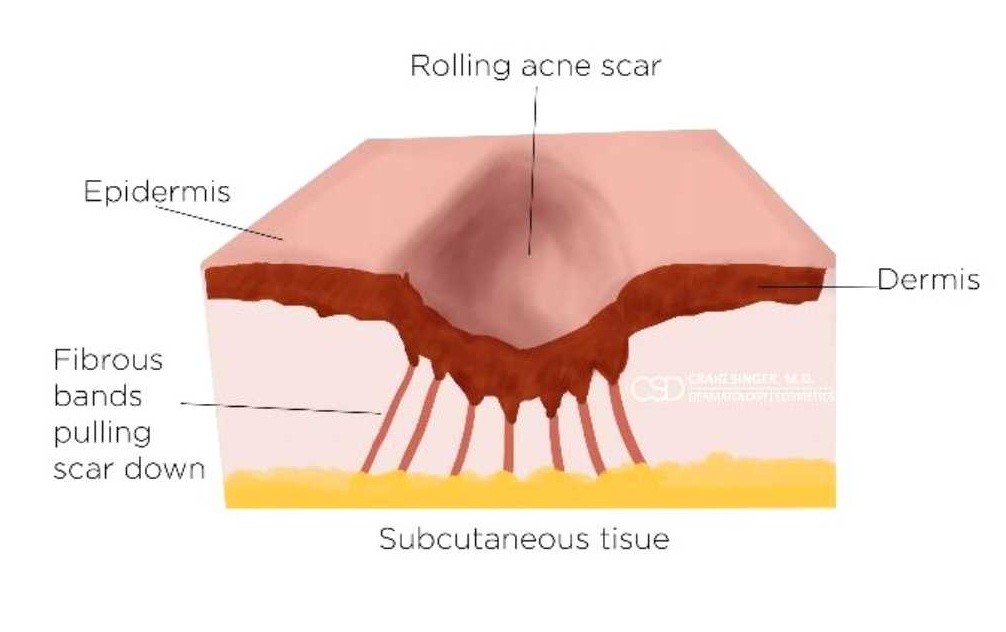
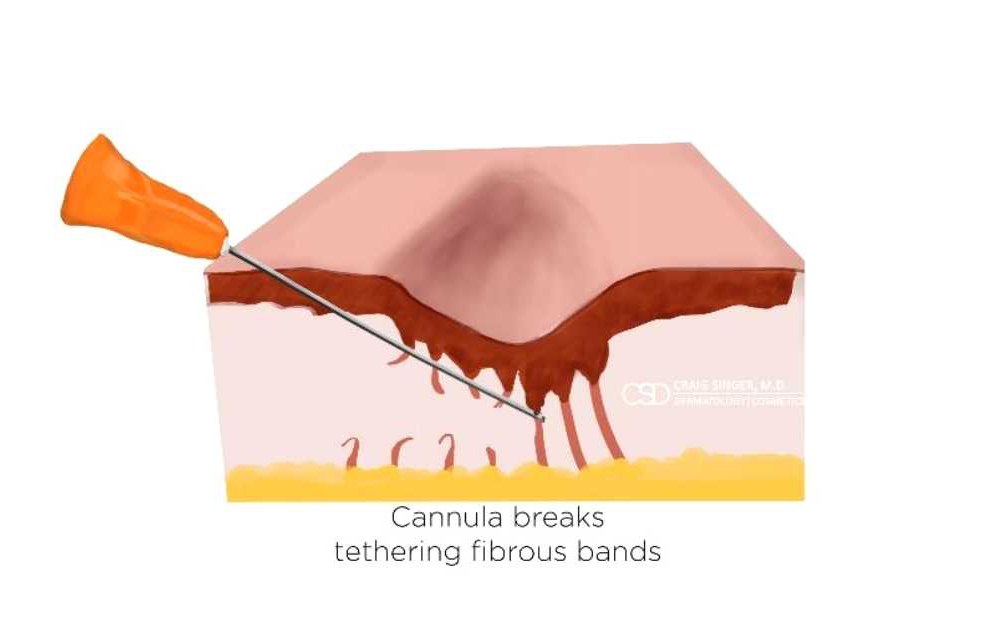
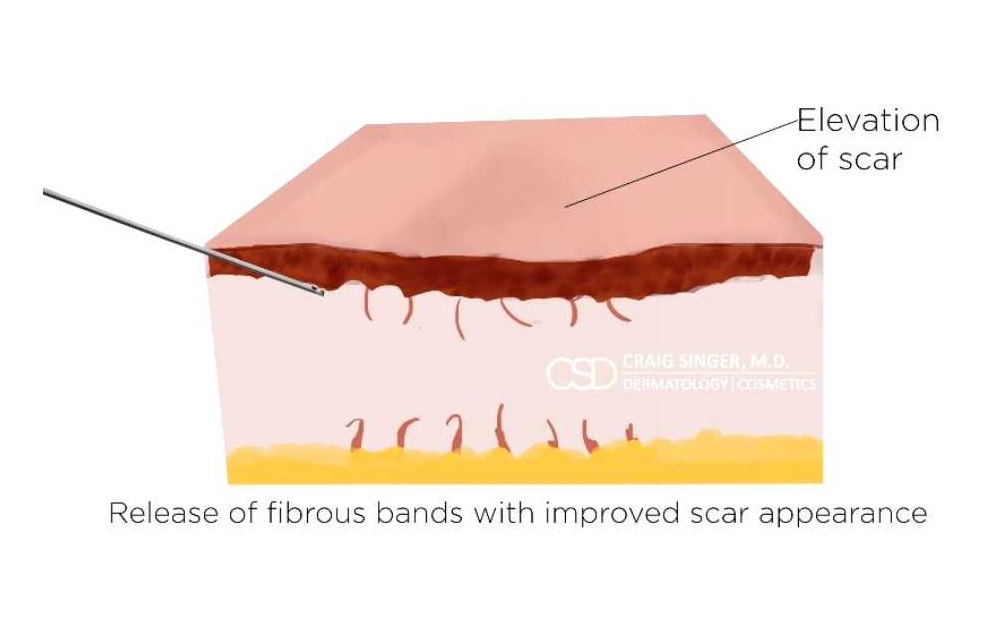
Releases what pulls scars down
By cutting the tethers beneath rolling scars, subcision addresses the cause of the depression rather than just the surface. Some bruising for a few days is normal as the area heals.
What are the indications for Subcision®?
- The decision to perform Subcision will depend on the type, location, and severity of scarring along with patient preference.
- Subcision® is best used for the treatment of rolling and boxcar acne scars and may be used for other types of scars such as from chicken pox.
- Subcision® is safe and effective in skin of color.
How many treatments will I need?
Two to four visits suffice for most cases of moderate scarring.
The number of sessions required to correct a depression will depend on the type, location, severity of depression, and intensity of treatment.
Intervals of at least one to two months in-between treatments are generally recommended. Subcision is often combined with microneedling during the same session.
How is Subcision® performed?
- The areas to be treated are circled in washable ink.
- Local anesthetic is instilled just below the skin for comfort. Depending upon the area to be treated, a large amount of dilute anesthetic (i.e., tumescent anesthesia) may be needed. This will reduce the amount of bruising and help highlight the scars.
- An introducer puncture is made in the skin allowing the smooth introduction of the cannula. The cannula is passed back and forth underneath the skin, at multiple levels, breaking fibrotic strands.
What subcision treats
Rolling acne scars
Broad, shallow scars that ripple the skin.
Tethered depressed scars
Some surgical scars
Bound-down scars from prior surgery.
Uneven scar texture
Often combined with
Microneedling
Building collagen at the surface.
Dermal fillers
Supporting the released scar.
Laser resurfacing
Smoothing the skin texture.
A tailored scar plan
Layered for the best result.
Frequently asked questions
What subcision treats, how it works, comfort, downtime, sessions, and combination treatment.
What does subcision treat?
Subcision improves depressed, rolling acne scars and other tethered, bound-down scars by releasing the bands that hold them down.
How does it work?
After numbing, Dr. Singer passes a fine needle or cannula under the scar to cut the fibrous tethers. Freed from that tension, the skin lifts, and new collagen forms as it heals.
Does it hurt?
The area is numbed first, so discomfort during the procedure is limited. Some soreness afterward is normal.
Is there downtime?
Expect bruising and some swelling for a few days. Most people return to normal activities quickly.
How many sessions will I need?
Deeper or more numerous scars often need a series of treatments, frequently combined with microneedling or laser.
Is subcision combined with other treatments?
Yes. Subcision is commonly paired with microneedling, fillers, or laser resurfacing for the most complete scar improvement.
How much downtime is there after Subcision®?
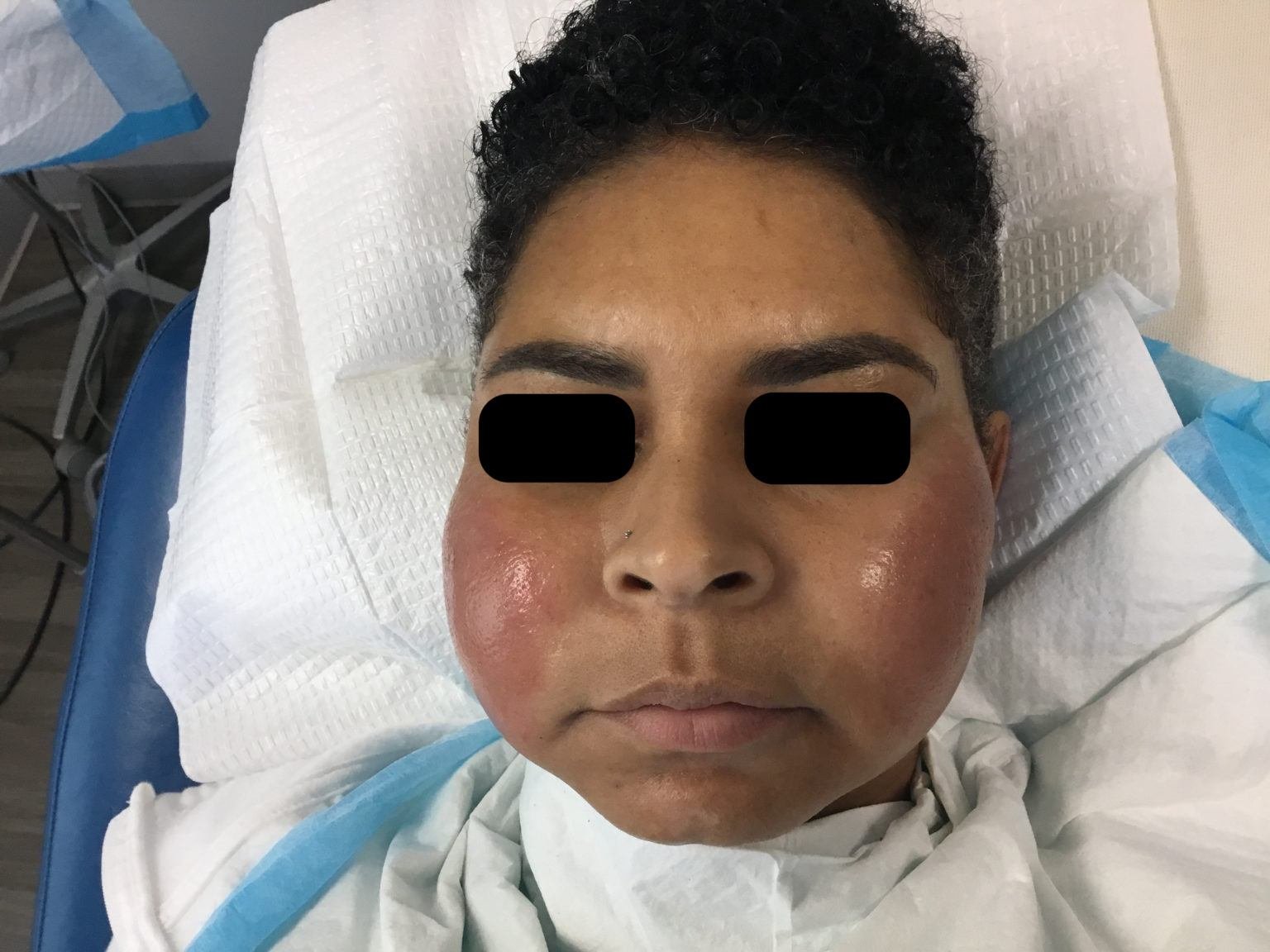
There are about 1-3 days of downtime after the procedure. Swelling and numbness from tumescent anesthesia typically resolves in 72 hours.
Bruising and tenderness will resolve in one week. Temporary discoloration (rare) may persist for a couple months. We ask that you apply pressure and ice afterwards. Tylenol is fine for pain relief.
What are Potential risks and Complications of Subcision®?
- Hematoma due to bleeding (a small hematoma is normal and there is a lot less bruising with the cannula)
- Temporary swelling “Chipmunk Cheeks” for several days
- Temporary pain/tenderness of treated sites
- Hypertrophic (i.e., thick) scars or keloid scars (rare)
- Infection requiring antibiotics (rare)
- Temporary numbness (resolves in days)
- Temporary darkening of skin –hyperpigmentation. (rare)
- Sub-optimal response or lack of improvement in scarring.
- Worsening of scarring (rare)
- Injury to nerve or blood vessel (rare). Smaller gauge (22) cannulas are used in marionette, nasolabial and temporal regions which have higher rates of bruising.
Subcision for acne scars near Detroit, MI
Dr. Craig Singer’s Bingham Farms practice offers cannula subcision and acne-scar revision for patients across metro Detroit and Oakland County.
- Detroit
- Bingham Farms
- Bloomfield Hills
- Birmingham
- Southfield
- Royal Oak
- Farmington Hills
- Novi
- Troy
- West Bloomfield
- Rochester Hills
- Sterling Heights
Explore other cosmetic services
Patient testimonials

4.9
Based on Google reviews
HOUR Detroit Top Doc
Recognized dermatologist
About Dr. Craig Singer MD Dermatology
Located in Bingham Farms, Craig Singer MD Dermatology was founded in 2017 by Dr. Craig Singer, a board-certified dermatologist.
We specialize in medical, surgical and cosmetic dermatology, treating patients of all ages, newborn through elderly. We have expertise in a wide variety of skin conditions including eczema, acne, and warts as well as complicated dermatological issues that include hair loss and autoimmune disease. In addition, we are highly skilled in the evaluation of moles and skin cancer.
For more than 20 years, Dr. Craig Singer has helped thousands of patients look and feel their best.

20+ Years
Trusted by Thousands
Board-Certified
Dermatologist & Pediatrician